ADHD OR HANDS-ON LEARNING? “FOCUSED” TODDLER” BECOMES “ATTENTION-DEFICIT” STUDENT?

By Kathy McGuire, June 11, 2009 4:42 pm

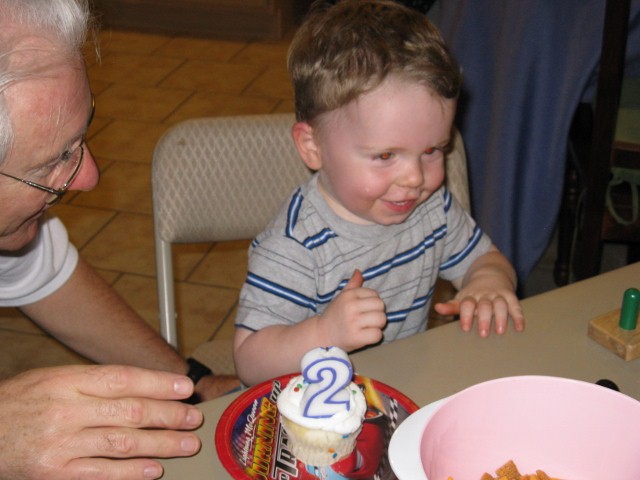
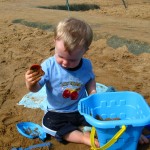
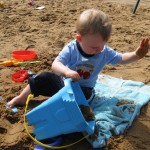
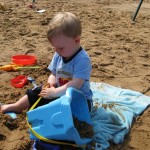
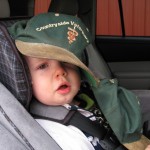
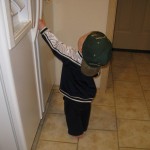
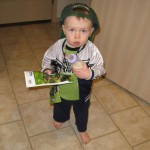
This 18-month old toddler is intent about learning. He is hard at work, figuring out every task, every piece of equipment put before him. He practices and practices until he masters a task. He comes back week after week to try again. He watches intently, trying to figure out “the trick” of doing each thing.

This child is an active, “hands-on” learner. He learns by doing.

Try blowing bubbles with him. While another child might clap their hands and chase the shiny bubbles, this one must “do it himself,” even if, time and again, he puts the blower into his mouth and ends up with a soapy taste. One day the wind helps him out, blowing bubbles out as he swings the wand. He is so ecstatic he almost falls out of the chair, and he repeats this magic time and again, laughing with joy: “I can do it!”

Months ago, he brought pop beads to me, over and over again, watching intently: how did they come apart? How go back together? Now, he has mastered the pulling apart, but not the putting back together. He stares and stares as I perform this magic: how do you do it?

Same with stacking blocks, placing rings on pegs, opening and closing small doors and windows, getting puzzle pieces to fit. He will practice over and over until he can do it, then move on.

The first day of kindergarten, he might be practicing standing on his head while the other children sit in a circle and listen to a story. First day of first grade, he is over trying to figure out how the pencil sharpener works while the others sit in a circle and listen while the teacher sings songs.

By fourth grade, when “academics” (reading and writing) thoroughly replace hands-on learning through manipulation, he will possibly be diagnosed as ADHD, “attention-deficit disorder,” and given medication so that he CAN sit still like all the other children while the teacher teaches.

Who is the real learner here? The passive recipient of information or the active, “hands-on” learner? Why does our education system place so much more emphasis upon “passive” learning, the absorption and reporting back of information? How can we justify that academic skills/college education will demarcate who will succeed and who will fail in our American society? There is no “equal opportunity” here!

Some children, some people, will never be “academically” inclined, in terms of enjoying reading literature and poetry, dealing with abstract similes and metaphors more than working with their hands. No amount of “equal opportunity” to a college education will allow them equal access to the rewards of our society, if their learning style is cut out of the curriculum starting in fourth grade, insuring their failure. Yet why can we say that their learning style, their skill set, is any less worthy of the extra funding that we give those who can make it into “college?”

We say these hands-on learners are unmotivated, not trying hard enough, “unfocused,” unable to concentrate, while we force them to learn in OUR style, sitting still for reading and writing, day after day.

And, when they fail, we shunt them into low-paying jobs or, most shamefully, fill our armed forces with them, their best option for hands-on skill training, only including that they risk their lives for their “higher education.”

This is not equal opportunity!! It will never be resolved by more chances to go to college. That door, the academic door, is firmly shut to them, as long as interest in reading and writing is the skill needed for getting in.

What if they were allowed hands-on learning opportunities throughout their school years, equally to reading and writing. What if by grade 12 they left school with skills in electrical wiring, welding, cable laying, construction, wood working, plumbing, website design, fashion design, horticulture, emergency medicine, and all the other hands-on things they could learn in twelve years! And what if these skills led to equal-opportunity higher education and high paying jobs?

The Career Academy model, which includes hands-on learning of specific job skills in high school learning communities, steps in this direction. Beginning in elementary school, Howard Gardner’s model of Multiple Intelligences shows how to incorporate all learning styles into education.

There is a huge inequality if reading-and-writing, academic preference for learning style, becomes the hurdle that learners have as the only path to equal opportunity education.

See Creative Edge Education, Creative Edge Parenting, and Dr. McGuire’s paper, “Don’t Fight Them, Join Them: Community-Wide Intervention for ADHD, School Drop Out, and Juvenile Delinquency.” You’ll find links to Gardner and other multi-modality models for education.

Find a variety of Personality Tests at our Creative Edge Focusing (TM) website, such as the Myers-Briggs Type Indicator (MBTI) and Keirsey Temperament Sorter, both of which give information about different kinds of learning style leading to differing career skills and preferences.

CREATIVE EDGE FOCUSING(tm):  SELF-HELP SKILLS FOR HOME AND WORK

Free Downloads: 


Complete Focusing Instructions Manual (17 pages)

“Ajas” Instantaneos Mini-Manual

Creative Edge Focusing (www.cefocusing.com ) teaches two basic self-help skills, Intuitive Focusing and Focused Listening, which can be applied at home and at work through The Creative Edge Focusing Pyramid.

Based upon Gendlin’s Experiential Focusing (www.focusing.org ) and Rogers’ Empathic Listening, our website is packed with Free Resources and instructions in these basic self-help skills. Learn how to build Support Groups, Conscious Relationships, and Creative Edge Organizations based upon these basic skills of emotional intelligence.

You can try out    “Focusing: Find Out What Is Bothering You.”

Click here to subscribe to Creative Edge Focusing(TM)’s  Instant “Ahah!” e-newsletter and get the latest exercises first!!! 

Click here for a free Intuitive Focusing Mini-Course

Click here for a free Focused Listening Mini-Course

 See  Core Concept: Conflict Resolution to find a complete mini-course on Interpersonal Focusing and Conflict Resolution, including Rosenberg’s Non-Violent Communication, Blanchard’s “One Minute Apology,” Patricia Evan’s books on Verbally Abuse and Controlling Relationships, McMahon’s Beyond The Myth Of Dominance, and much more.

See  Core Concept: Intimate Relationship to find a complete mini-course on increasing intimacy and sexuality, including the “Sharing Your Day” exercise, Listening/Focusing Partnerships for The Way of Relationship, untangling and equalizing desire, tantric sexuality, and much more.

Download complete Instant “Ahah!” Mini-Manual, in English and Spanish, from CEF Website, or download from links at top of this blog.

Find links to free articles, personality tests, multi-media Self-Help training, Classes and workshops

Dr. Kathy McGuire, Director

Creative Edge Focusing (TM)

www.cefocusing.com

  • Share/Save/Bookmark

BARACK OBAMA ENNEAGRAM ONE: A MAN OF LAW

By Kathy McGuire, June 4, 2009 4:42 pm

The Enneagram is a well-regarded personality measure dividing people into nine distinct personality styles: One: Critic, Two: Helper, Three: Performer, Four: Individualist, Five: Observer, Six: Loyalist, Seven: Enthusiast, Eight: Challenger, Nine: Peacemaker.

While other Enneagram experts have identified Obama as an Enneagram Nine or Three , expert Clarence Thomson of Enneagram Central stands by his decision that Obama is an Enneagram One: A Man of Law.

Thomson describes the Nine Personality Styles, including Enneagram One: The Critic. Each description describes the undeveloped and developed aspects of each style:

“Ones search for what is wrong and how to fix it. When stuck, they are rigid, moralistic and angry. When free, they are supremely moral, compassionate and reliable. Their life is about goodness: its absence or presence.”

Here are excerpts from Thomson’s article in the Out of the Box Coaching Newsletter :

“President Obama, in my opinion, is a style One. Ones tend to be idealistic, guided by clear convictions of right and wrong, and work oriented. Every style has certain strengths and limitations. Style One is, in one way, unduly humble. Ones have a tendency to erase their personal feelings and unite, almost merge their personal agenda with the demands of an ideal or law or tradition or principle.

If you ask Ones what they think, you will get your answer consciously or unconsciously filtered through principles that are larger than themselves and may be inherited from a book or tradition.

It is probably not accidental that Obama would study constitutional law. He will make his decisions based not as much on personal convictions as on the wisdom of the law. He will be a lawyer all day long. He may have some charisma, but he will not be ‘chatty’ or intensely personal. He will have charisma, but not really panache.”

And later in the article:

“Obama’s idealism is not based on evidence. It is based on an inner conviction that right can and must prevail. This is a two-edged characteristic. On the one hand, it enabled him to work as a community organizer with defeat scribbled on every wall and etched in every defeated face. He kept going against the evidence. This could get him into trouble if he has a policy that is not working. He may believe it must work, even against the evidence.”

Learn all about the Enneagram Nine Styles at Thomson’s website and take an Enneagram questionnaire, and also visit his colleague Mary Bast’s Enneagram and Coaching website,  Break Out of the Box, for a wealth of descriptions helping you identify your personal style.

Find a variety of Personality Tests at our Creative Edge Focusing (TM) website.

CREATIVE EDGE FOCUSING(tm):  SELF-HELP SKILLS FOR HOME AND WORK

Free Downloads: 

Complete Focusing Instructions Manual (17 pages)

“Ajas” Instantaneos Mini-Manual

Creative Edge Focusing (www.cefocusing.com ) teaches two basic self-help skills, Intuitive Focusing and Focused Listening, which can be applied at home and at work through The Creative Edge Focusing Pyramid.

Based upon Gendlin’s Experiential Focusing (www.focusing.org ) and Rogers’ Empathic Listening, our website is packed with Free Resources and instructions in these basic self-help skills. Learn how to build Support Groups, Conscious Relationships, and Creative Edge Organizations based upon these basic skills of emotional intelligence.

You can try out    “Focusing: Find Out What Is Bothering You.”

Click here to subscribe to Creative Edge Focusing(TM)’s  Instant “Ahah!” e-newsletter and get the latest exercises first!!! 

Click here for a free Intuitive Focusing Mini-Course

Click here for a free Focused Listening Mini-Course

 See  Core Concept: Conflict Resolution to find a complete mini-course on Interpersonal Focusing and Conflict Resolution, including Rosenberg’s Non-Violent Communication, Blanchard’s “One Minute Apology,” Patricia Evan’s books on Verbally Abuse and Controlling Relationships, McMahon’s Beyond The Myth Of Dominance, and much more.

See  Core Concept: Intimate Relationship to find a complete mini-course on increasing intimacy and sexuality, including the “Sharing Your Day” exercise, Listening/Focusing Partnerships for The Way of Relationship, untangling and equalizing desire, tantric sexuality, and much more.

Download complete Instant “Ahah!” Mini-Manual, in English and Spanish, from CEF Website, or download from links at top of this blog.

Find links to free articles, personality tests, multi-media Self-Help training, Classes and workshops

Dr. Kathy McGuire, Director

Creative Edge Focusing (TM)

www.cefocusing.com


  • Share/Save/Bookmark

FOCUSING AND CHILDREN: PRESERVING AND RECLAIMING TRANSPARENCY

By Kathy McGuire, May 30, 2009 4:12 pm

Toddlers, before learning words, can be so transparent, their whole body beaming out their emotions and needs.

First trips to the park, 16-months old, my steadily-walking toddler grandson simply sits down, in shock and awe, many times as he sees other people his size, all kinds of dogs, people stretched out on the grass. He simply cannot stand up and take in all this new information at the same time.

Almost choking on a piece of orange, as soon as recovered from the emotional upset, he “asks” (by pointing) for another piece of orange. He tastes it, chews it carefully, a quizzical look on his face. He simply MUST determine what went wrong, master this scary and unexpected experience.

First day in day care, he carries his jacket with him all day long, beaming out “I am reminding myself of home, I am holding on to home, I will be going home.”

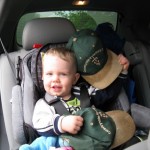
Uneasy about leaving his home with Dad and Great-Grandparents to spend the day with me, he insists upon taking Great-Grandpa’s hats, and wearing them for hours.

As we develop more cognitively, our capacity to “symbolize” intervenes between our sheer emotional experiences and what we “choose” to express.

But, still, at age seven, I could read my son’s inner experience from outer symbols. Adopted at birth, having just received his first letter and photo of his birthmom, showing her with her “new” family, husband and child, he runs from the room angrily. I find him in his room a little later, where he has unravelled several hundred feet of fishing line from the spool, creating a huge tangle all around him (this image brings tears to me now, 15 years later). Using Roger’s Empathic Listening, I can reflect him to himself: “Seems like you are feeling all tangled up inside.”

As we get older and older, and through painful life experiences saying “Don’t show yourself here. Don’t cry. Don’t show fear. Don’t even show awe and joy,” we lose “touch” with ourselves, with that transparency, so that we cannot even name our own experience to ourselves, much less authentically express it to others.

Gendlin’s Focusing (www.focusing.org ) and McGuire’s Intuitive Focusing can help you refind and reclaim your inner experiencing, allowing you to find the clarity needed to move forward in life situations

Using Intuitive Focusing and Empathic, Reflective, Focused Listening with children can help them stay in tune with themselves and be able to express their inner experience, their emotions, wants, needs, creative ideas. See The Children’s Corner at The Focusing Institute.

Read a book review of Stapert and Verleifde’s Focusing With Children: The Art of Communication with Children At School and Home , UK: PCCS Books, 2008 and order the book from The Focusing Institute bookstore or from Amazon.

Also see Edwin M. McMahon’s Beyond The Myth Of Dominance for stories of taking a Focusing attitude with children, and McMahon’s The Little Bird Who Found Herself, a colorful and simple story book for children (and adults) about “sitting with” instead of “running away from” feelings and other felt-sensing in the body.

CREATIVE EDGE FOCUSING(tm):  SELF-HELP SKILLS FOR HOME AND WORK

Free Downloads:

Complete Focusing Instructions Manual (17 pages)

“Ajas” Instantaneos Mini-Manual

Creative Edge Focusing (www.cefocusing.com ) teaches two basic self-help skills, Intuitive Focusing and Focused Listening, which can be applied at home and at work through The Creative Edge Focusing Pyramid.

Based upon Gendlin’s Experiential Focusing (www.focusing.org ) and Rogers’ Empathic Listening, our website is packed with Free Resources and instructions in these basic self-help skills. Learn how to build Support Groups, Conscious Relationships, and Creative Edge Organizations based upon these basic skills of emotional intelligence.

You can try out    “Focusing: Find Out What Is Bothering You.”

Click here to subscribe to Creative Edge Focusing(TM)’s  Instant “Ahah!” e-newsletter and get the latest exercises first!!! 

Click here for a free Intuitive Focusing Mini-Course

Click here for a free Focused Listening Mini-Course

 See  Core Concept: Conflict Resolution to find a complete mini-course on Interpersonal Focusing and Conflict Resolution, including Rosenberg’s Non-Violent Communication, Blanchard’s “One Minute Apology,” Patricia Evan’s books on Verbally Abuse and Controlling Relationships, McMahon’s Beyond The Myth Of Dominance, and much more.

See  Core Concept: Intimate Relationship to find a complete mini-course on increasing intimacy and sexuality, including the “Sharing Your Day” exercise, Listening/Focusing Partnerships for The Way of Relationship, untangling and equalizing desire, tantric sexuality, and much more.

Download complete Instant “Ahah!” Mini-Manual, in English and Spanish, from CEF Website, or download from links at top of this blog.

Find links to free articles, personality tests, multi-media Self-Help training, Classes and workshops

Dr. Kathy McGuire, Director

Creative Edge Focusing (TM)

www.cefocusing.com

  • Share/Save/Bookmark

MIND/BODY HEALING: FOCUSING-ORIENTED BODY WORK

By Kathy McGuire, May 25, 2009 9:26 pm

Gendlin’s Focusing (Bantam, 1981, 2007; www.focusing.org ), and McGuire’s Intuitive Focusing, are premiere techniques for mind/body healing. Focusing happens exactly at the edge between conscious and unconscious, the “preconscious” that is immediately available as a “bodily felt sense.” McGuire’s calls it  ”intuitive feel,” the “something-more-than-words,”  The Creative Edge, the source of creativity, innovation, and problem solving.

Michael Mayer has years of experience working at the interface between mind and body, and between conscious/unconscious/preconscious. He has worked extensively combining body-centered practices like Tai Chi and Qigong with Focusing-Oriented Psychotherapy. Below he reviews his past work and announces his new book, Energy Psychology: Self Healing methods For Bodymind Health, which integrates energy therapies, meridian tapping methods like Emotional Freedom Techniques (www.emofree.com)  as well as Qigong and many others, with Focusing for mind/body self-healing. Quoted from Dr. Mayer on The Focusing Discussion e-list at www.focusing.org (subscribe in Category “Felt Community”, then e-lists): 

I was the Focusing training coordinator for the San Francisco East Bay area from around 1978 to 1988, and Focusing has been close to my heart and an important part of my professional  life for many years.

Over the years I have integrated Focusing with many other traditions: In the 1980’s I  combined Focusing with psychomythology with my “Mythic Journey Process” (Mayer, Focusing Folio 1982);  in the 1990’s I integrated Focusing with  Qigong and Chronic Pain (Mayer, “Qigong and Behavioral Medicine, An Integrated approach to Chronic Pain,” Qi Journal, 1986). Then I brought Focusing together with many facets of Qigong and other traditions of postural initiation (Mayer, Bodymind Healing Psychotherapy, 2007). Now with my latest book I’m hoping to show the importance of Focusing to bring out the inner energetic dimensions of Energy Psychology.
I wanted to let the Focusing community know that I have a new book , Energy Psychology: Self Healing Methods for Bodymind Health (North Atlantic/Random House, 2009) that will be released tomorrow April 28th. Here’s an excerpt:
“In order to bring the healing abilities of a comprehensive energy psychology to the public, I believe that in addition to the well-known energy psychology methods such as EFT, the field of energy psychology (EP) would be well served by expanding its terrain to include Qigong and methods of energy cultivation from other traditions of meditation and postural initiation (Goodman, 1990), depth psychology, Gendlin’s Focusing, symbolic process traditions, Kabalistic methods, etc…

…The internal process of psychological change, as Gendlin (1978) rightly pointed out, has energy activation  (Qigong) as an inextricable part of it, as a patient’s energetic “felt shift” emerges along with a patient’s discovering new meaning. //bolding by Dr. McGuire//

Also symbolic process methods, such as my Mythic Journey Process (Mayer, 1994) and River of Life Process (Mayer 2007, 2009), create an internal energy (Jung, Vol. VIII) that helps a person find a meaningful life path, and helps patients to find a new life stance (Goodman, 1990, Mayer, 2004). As related to EP, this expands the field to include both internal and external methods of energetic change. ..My newest book, Energy Psychology: Self-Healing Practices for Bodymind Health is written to help accomplish these aims (Mayer, 2009)….”

If you are interested in getting a copy of Energy Psychology, on April 28th,  tomorrow, the book will be  available on Amazon.com(direct link to Mayer’s book), and all major books stores, or you can order Energy Psychology or any of my other books from my website www.bodymindhealing.com.
I’ll look forward to hearing more about what other Focusers are up to nowadays from this list, and feel free to email me drmichael@bodymindhealing.com.
Warm regards,
Michael Mayer

Claudia Conza also announces the Second International “Focusing in the body-oriented professions” residential workshop, Sept. 22-26, 2009, Maennedorf, Switzerland (also from the Focusing Discussion e-list):

 
Dear all, Guten Tag
 
Finally I am happy to announce our 2. International residential workshop “Meeting at the Edge”2009 in Switzerland
After the big success in Ischia, Italy in 2007 we are ready to introduce the next location for:
 
“MEETING AT THE EDGE”
Focusing in the body-oriented professions
A 4 day residential workshop
September 22 – 26, 2009
Boldern, conference center, Maennedorf, (Zurich) Switzerland.
 
The event will be in English with translation in to German and Italian. Please check our webpage: www.mae2009.org where with time we will ad more and more information, photos and answers to the FAQ.
Attached to print I am sending our flyer in pdf format to print our flyer.
 
I am looking forward to meeting you in September 2009 here in Switzerland to share and explore on our topic and to show you the lovely site with the view down to the lake of Zurich and our mountains.
 
Claudia
In the name of the organising board, Francesca, Nicoletta, Mathias, Larry, Steve, Jack

CREATIVE EDGE FOCUSING(tm):  SELF-HELP SKILLS FOR HOME AND WORK

Free Downloads:

Complete Focusing Instructions Manual (17 pages)

“Ajas” Instantaneos Mini-Manual

Creative Edge Focusing (www.cefocusing.com ) teaches two basic self-help skills, Intuitive Focusing and Focused Listening, which can be applied at home and at work through The Creative Edge Focusing Pyramid.

Based upon Gendlin’s Experiential Focusing (www.focusing.org ) and Rogers’ Empathic Listening, our website is packed with Free Resources and instructions in these basic self-help skills. Learn how to build Support Groups, Conscious Relationships, and Creative Edge Organizations based upon these basic skills of emotional intelligence.

You can try out    “Focusing: Find Out What Is Bothering You.”

Click here to subscribe to Creative Edge Focusing(TM)’s  Instant “Ahah!” e-newsletter and get the latest exercises first!!! 

Click here for a free Intuitive Focusing Mini-Course

Click here for a free Focused Listening Mini-Course

 See  Core Concept: Conflict Resolution to find a complete mini-course on Interpersonal Focusing and Conflict Resolution, including Rosenberg’s Non-Violent Communication, Blanchard’s “One Minute Apology,” Patricia Evan’s books on Verbally Abuse and Controlling Relationships, McMahon’s Beyond The Myth Of Dominance, and much more.

See  Core Concept: Intimate Relationship to find a complete mini-course on increasing intimacy and sexuality, including the “Sharing Your Day” exercise, Listening/Focusing Partnerships for The Way of Relationship, untangling and equalizing desire, tantric sexuality, and much more.

Download complete Instant “Ahah!” Mini-Manual, in English and Spanish, from CEF Website, or download from links at top of this blog.

Find links to free articles, personality tests, multi-media Self-Help training, Classes and workshops

Dr. Kathy McGuire, Director

Creative Edge Focusing (TM)

www.cefocusing.com

  • Share/Save/Bookmark

TRANSITION TOWNS: LOCAL SUSTAINABILITY FOR GLOBAL CHANGE

By Kathy McGuire, May 15, 2009 6:57 pm

In the Transition Towns movement, www.transitiontowns.org,  political action is thoroughly integrated at the local level, building local sustainability and community as a basis for the “resiliency” needed to affect long-term, global change. But even more importantly, skill training for emotional and personal growth and conflict resolution is built right into hands-on, political action. 

Here is a short definition of  Transition Towns from a Facebook Event page announcing an Introductory Workshop and the 2009 Transition Towns Conference in the UK:
           ”The Transition movement is a fast-growing, bottom-up response to peak oil and climate change. There are now thousands of communities around the world using this model, and it is being widely acknowledged as a positive, solutions focused approach, ‘more like a party than a protest march’.”
        
From the Transition Towns website, www.transitiontowns.org :

…A Transition Initiative is a community (lots of examples here) working together to look Peak Oil and Climate Change squarely in the eye and address this BIG question:

“for all those aspects of life that this community needs in order to sustain itself and thrive, how do we significantly increase resilience (to mitigate the effects of Peak Oil) and drastically reduce carbon emissions (to mitigate the effects of Climate Change)?”

After going through a comprehensive and creative process of:

  • awareness raising around peak oil, climate change and the need to undertake a community lead process to rebuild resilience and reduce carbon
  • connecting with existing groups in the community
  • building bridges to local government
  • connecting with other transition initiatives
  • forming groups to look at all the key areas of life (food, energy, transport, health, heart & soul, economics & livelihoods, etc)
  • kicking off projects aimed at building people’s understanding of resilience and carbon issues and community engagement
  • eventually launching a community defined, community implemented “Energy Descent Action Plan” over a 15 to 20 year timescale

This results in a coordinated range of projects across all these areas of life that strives to rebuild the resilience we’ve lost as a result of cheap oil and reduce the community’s carbon emissions drastically.”

I like the actual example of a transition town which you can experience at Transition Town Westcliff. You’ll get a taste for all the fun and educational and hands-on gatherings, meetings, celebrations as a town works together for local sustainability affecting global change. “More like a party than a protest march,” indeed! I can’t wait to build or to join such a community.

I like the emphasis upon personal and emotional growth, mutual support, and conflict resolution skill training added into the more specific political goals of building local resilience as part of changing global problems of peak oil and climate change.

I have offered copies of my manual, Focusing in Community: How To Start A Listening/Focusing Support Group, as one model of peer-based support which teaches core skills, Intuitive Focusing and Focused Listening,  that can be applied to  emotional, personal, interpersonal, and group-level growth and community building.

There is a handbook for starting a transition town, The Transition Town Handbook: from oil dependence to local resilience,written by founder Rob Hopkins. You can order the book at the link.

Find out all about Transition Towns, and the 2009 Conference in London, UK, May 22-24, 2009 at www.transitiontowns.org . The conference itself sold out immediately, but you can still sign up for evening Introductory events and pre- and post-conference workshops.

The Creative Edge Focusing(TM) Approach To Community Building

Creative Edge Focusing (TM)’s Culture of Creativity  fights apathy by engaging every person  at the Creative Edge of individual experiencing. Whether in Creative Edge Education or Creative Edge Organizations, Listening/Focusing Turns are used as a basic method for helping people to find and articulate their own Creative Edge.

Creative Edge Focusing and Creative Edge Listening can be used for problem solving at home and at work, alone, in parenting and relationships, during interpersonal conflict, and in group or community decision making situations. The Creative Edge Pyramid describes applications from Focusing Alone to Creative Edge Organizations.

For application in business settings, see my article, “Creative Edge Organizations: Businesses and Organizations As A ‘Kind’ Of Focusing Community” from The Folio: Thirtieth Anniversity Tribute edition at The Focusing Institute, www.focusing.org .

CREATIVE EDGE FOCUSING(tm):  SELF-HELP SKILLS FOR HOME AND WORK

Free Downloads:

Complete Focusing Instructions Manual (17 pages)

“Ajas” Instantaneos Mini-Manual

Creative Edge Focusing (www.cefocusing.com ) teaches two basic self-help skills, Intuitive Focusing and Focused Listening, which can be applied at home and at work through The Creative Edge Focusing Pyramid.

Based upon Gendlin’s Experiential Focusing (www.focusing.org ) and Rogers’ Empathic Listening, our website is packed with Free Resources and instructions in these basic self-help skills. Learn how to build Support Groups, Conscious Relationships, and Creative Edge Organizations based upon these basic skills of emotional intelligence.

You can try out    “Focusing: Find Out What Is Bothering You.”

Click here to subscribe to Creative Edge Focusing(TM)’s  Instant “Ahah!” e-newsletter and get the latest exercises first!!! 

Click here for a free Intuitive Focusing Mini-Course

Click here for a free Focused Listening Mini-Course

 See  Core Concept: Conflict Resolution to find a complete mini-course on Interpersonal Focusing and Conflict Resolution, including Rosenberg’s Non-Violent Communication, Blanchard’s “One Minute Apology,” Patricia Evan’s books on Verbally Abuse and Controlling Relationships, McMahon’s Beyond The Myth Of Dominance, and much more.

See  Core Concept: Intimate Relationship to find a complete mini-course on increasing intimacy and sexuality, including the “Sharing Your Day” exercise, Listening/Focusing Partnerships for The Way of Relationship, untangling and equalizing desire, tantric sexuality, and much more.

Download complete Instant “Ahah!” Mini-Manual, in English and Spanish, from CEF Website, or download from links at top of this blog.

Find links to free articles, personality tests, multi-media Self-Help training, Classes and workshops

Dr. Kathy McGuire, Director

Creative Edge Focusing (TM)

www.cefocusing.com

  • Share/Save/Bookmark

GRASSROOTS GREENING: PLANTING GROWS COMMUNITY

By Kathy McGuire, May 7, 2009 12:13 pm

The “One Small Thing” method of Creative Edge Focusing (TM) helps organizations find that one small step people will take to become motivated and engaged. Building Community through Listening/Focusing Partnerships/Groups/Teams  is an easy outgrowth of these first collaborative efforts. Below is an example of the “one small thing” that turned a traffic lane into a green and walkable neighborhood.

“Grassroots Greening —  Two Bike Lanes, 3 Miles of Green Space, and a Hundred New Friends: How One Woman Transformed a Neighborhood” (Sunset magazine, May 2009, pp.46-49) tells how Gillian Gillett, who bought a home on a busy intersection and six-lane thoroughfare in San Francisco, created a neighborhood community by starting with “one small thing” — she collected 300 signatures on a traffic calming petition” needed by the city to consider safety improvements. “While the traffic slowed down (the speed limit was reduced from 40 to 25), her plan to make her neighborhood more people-friendly sped up.”

By Fall of 2004, Gillett had received a $75,000 grant from the Metropolitan Transportation Commission for neighborhood revitalization. She got bike lanes added and traffic lanes reduced from six to four. She got a traffic light installed. Now she and others could cross the street to the nearby hospital! This “one small step” now allowed the area to become a walkable “neighborhood.”

Gillett and her husband found themselves now the core of a group of activists, including neighbors, schools, and merchants, all suddenly seeing themselves as part of this neighborhood. Gillett and her husband Jeff Goldberg started looking for the next step in building a community. Research and canvassing pointed in the same direction: planting trees, plants, greening a neighborhood builds a community.

They got permission to plant the highway median, the only greenspace available. At the same time, the mayor of San Francisco got on board, proclaiming that 5000 trees a year be planted in SF and appointing a “green czar” to help it happen.

The first planting, of two blocks of median, had 126 participants. The next, 400.  “We do the plantings as a block party with a band and food and participation of local merchants, “Gillett explains. “Before this project, traffic was so heavy that people didn’t really know their neighbors. It’s really contributing to the resiliency of the neighborhood.”

And another quote from the article: “This project connected me to the neighborhood,” Gillett says of her now seven-year quest to improve not only her own block but her entire community. “This was never about plants. It was about making a neighborhood I could walk in. Drivers in their cars think of this road as a way to get to the highway. We think of it as home.”

The article ends with a listing “Green in the hood” community-based greening projects around the West : Seattle’s www.groundswellnw.org , Portland’s www.cityrepair.org , LA’s www.laguerrillagardening.org  , national urban forestry support at www.treelink.org/nucfac , and Gillett’s organization, www.sanjosequerrero.com .

See the article, at www.sunset.com , for details.

You can share your own experiences of being the “first” in your neighborhood with greening at readerletters@sunset.com.

See Empowerment Organization at Creative Edge Focusing (TM) for more examples and “The One Small Thing” Focusing exercise.

Creative Edge Focusing (TM)’s Culture of Creativity  fights apathy by engaging every person  at the Creative Edge of individual experiencing. Whether in Creative Edge Education or Creative Edge Organizations, Listening/Focusing Turns are used as a basic method for helping people to find and articulate their own Creative Edge.

Creative Edge Focusing and Creative Edge Listening can be used for problem solving at home and at work, alone, in parenting and relationships, during interpersonal conflict, and in group or community decision making situations. The Creative Edge Pyramid describes applications from Focusing Alone to Creative Edge Organizations.

For application in business settings, see my article, “Creative Edge Organizations: Businesses and Organizations As A ‘Kind’ Of Focusing Community” from The Folio: Thirtieth Anniversity Tribute edition at The Focusing Institute, www.focusing.org .

CREATIVE EDGE FOCUSING(tm):  SELF-HELP SKILLS FOR HOME AND WORK

Free Downloads:

Complete Focusing Instructions Manual (17 pages)

“Ajas” Instantaneos Mini-Manual

Creative Edge Focusing (www.cefocusing.com ) teaches two basic self-help skills, Intuitive Focusing and Focused Listening, which can be applied at home and at work through The Creative Edge Focusing Pyramid.

Based upon Gendlin’s Experiential Focusing (www.focusing.org ) and Rogers’ Empathic Listening, our website is packed with Free Resources and instructions in these basic self-help skills. Learn how to build Support Groups, Conscious Relationships, and Creative Edge Organizations based upon these basic skills of emotional intelligence.

You can try out    “Focusing: Find Out What Is Bothering You.”

Click here to subscribe to Creative Edge Focusing(TM)’s  Instant “Ahah!” e-newsletter and get the latest exercises first!!! 

Click here for a free Intuitive Focusing Mini-Course

Click here for a free Focused Listening Mini-Course

 See  Core Concept: Conflict Resolution to find a complete mini-course on Interpersonal Focusing and Conflict Resolution, including Rosenberg’s Non-Violent Communication, Blanchard’s “One Minute Apology,” Patricia Evan’s books on Verbally Abuse and Controlling Relationships, McMahon’s Beyond The Myth Of Dominance, and much more.

See  Core Concept: Intimate Relationship to find a complete mini-course on increasing intimacy and sexuality, including the “Sharing Your Day” exercise, Listening/Focusing Partnerships for The Way of Relationship, untangling and equalizing desire, tantric sexuality, and much more.

Download complete Instant “Ahah!” Mini-Manual, in English and Spanish, from CEF Website, or download from links at top of this blog.

Find links to free articles, personality tests, multi-media Self-Help training, Classes and workshops

Dr. Kathy McGuire, Director

Creative Edge Focusing (TM)

www.cefocusing.com

  • Share/Save/Bookmark

BOTTOM-UP EMPOWERMENT: PENNY HARVEST ENGAGES SCHOOL CHILDREN IN SERVICE-LEARNING

By Kathy McGuire, April 20, 2009 4:47 pm

 Empowerment Organization is a method for motivating people “from the bottom up.” It includes “The One Small Thing” exercise, looking for a small action that many people will feel able to take as the first step in building grass-roots, bottom-up empowerment and community involvement.

 Here is a wonderful example of “One Small Thing,” The Penny Harvest fund-raiser sponsored at elementary schools throughout the USA  by the Common Cents Organization. Begun in 1991 when four-year-old Nora Gross asked her father, co-founder Teddy Gross,  for help in feeding a homeless man, since then, over $7 million in pennies has been collected by school children and used to found a variety of projects in their local area.

Not only are pennies collected throughout neighborhoods, but then the students spend weeks  learning about the grant-making process from the bottom up, eventually deciding on their own where Penny Harvest grants will be made.

I quote from the article written by Darcy Tomky for the Holyoke Enterprise (MA) newspaper , “Elementary Students Explore The Penny Harvest Grant-Making Process” (I have removed the names of students mentioned):

     With 1,020 pounds of pennies collected, Holyoke elementary and high school students have dived into the second phase of the Penny Harvest philanthropic project.
     The students have the opportunity to award a $1,000 grant to a non-profit organization. Now the question is: who should receive the money?
     A roundtable committee made up of 14 elementary students has been formed to answer that question. Meeting once a week with high school sponsor T_____ and her high school leadership class student coaches, they are learning about the grant making process…
     …The students have devoted themselves to being “a group of committed people working together to help meet important needs in the community.”
     On their fourth week of the project, T_____ noted the students have learned about the democratic process by taking oaths and assigning roles such as president and secretary. They have also explored terms like community and philanthropy.
     According to high schooler B_____, the project is not just about giving away money; it is also focused on service. One of the objectives of the Penny Harvest is to improve neighborhoods through service projects the students will plan and execute in addition to awarding a grant.
     The next step in the grant making process is to “identify the issue the kids as a whole care about,” said T____. The roundtable discussed the question, “What do you see around you that you want to see changed?”
     The roundtable developed a survey to find out what issues other elementary students care about. The survey, distributed by roundtable members on Thursday, March 5, gave students several options of who they would like to receive the funds such as sick animals, people without homes, disabled children and elderly people.
     Once the issues are narrowed down, students will research the them to find what causes the problems and ways to solve or improve the situation. The high school coaches will also research specific non-profit organizations that address those issues.
     The next step in the process will be to conduct an application and interview process with the non-profits. Students will follow up with letters of acceptance or decline.
     Once a non-profit is chosen, the roundtable will finish up by planning a celebration party for elementary students and the recipient of the Penny Harvest grant. They hope to award the check in late spring.”

This is bottom-up motivation: everyone can donate and collect pennies. With that first step comes community involvement in the larger project, helping students learn about service and providing services for those in need.

See Empowerment Organization for more examples and “The One Small Thing” Focusing exercise.

Creative Edge Focusing (TM)’s Culture of Creativity  fights apathy by engaging every person  at the Creative Edge of individual experiencing. Whether in Creative Edge Education or Creative Edge Organizations, Listening/Focusing Turns are used as a basic method for helping people to find and articulate their own Creative Edge.

Creative Edge Focusing and Creative Edge Listening can be used for problem solving at home and at work, alone, in parenting and relationships, during interpersonal conflict, and in group or community decision making situations. The Creative Edge Pyramid describes applications from Focusing Alone to Creative Edge Organizations.

For application in business settings, see my article, “Creative Edge Organizations: Businesses and Organizations As A ‘Kind’ Of Focusing Community” from The Folio: Thirtieth Anniversity Tribute edition at The Focusing Institute, www.focusing.org .

CREATIVE EDGE FOCUSING(tm):  SELF-HELP SKILLS FOR HOME AND WORK

Free Downloads:

Complete Focusing Instructions Manual (17 pages)

“Ajas” Instantaneos Mini-Manual

Creative Edge Focusing (www.cefocusing.com ) teaches two basic self-help skills, Intuitive Focusing and Focused Listening, which can be applied at home and at work through The Creative Edge Focusing Pyramid.

Based upon Gendlin’s Experiential Focusing (www.focusing.org ) and Rogers’ Empathic Listening, our website is packed with Free Resources and instructions in these basic self-help skills. Learn how to build Support Groups, Conscious Relationships, and Creative Edge Organizations based upon these basic skills of emotional intelligence.

You can try out    “Focusing: Find Out What Is Bothering You.”

Click here to subscribe to Creative Edge Focusing(TM)’s  Instant “Ahah!” e-newsletter and get the latest exercises first!!! 

Click here for a free Intuitive Focusing Mini-Course

Click here for a free Focused Listening Mini-Course

 See  Core Concept: Conflict Resolution to find a complete mini-course on Interpersonal Focusing and Conflict Resolution, including Rosenberg’s Non-Violent Communication, Blanchard’s “One Minute Apology,” Patricia Evan’s books on Verbally Abuse and Controlling Relationships, McMahon’s Beyond The Myth Of Dominance, and much more.

See  Core Concept: Intimate Relationship to find a complete mini-course on increasing intimacy and sexuality, including the “Sharing Your Day” exercise, Listening/Focusing Partnerships for The Way of Relationship, untangling and equalizing desire, tantric sexuality, and much more.

Download complete Instant “Ahah!” Mini-Manual, in English and Spanish, from CEF Website, or download from links at top of this blog.

Find links to free articles, personality tests, multi-media Self-Help training, Classes and workshops

Dr. Kathy McGuire, Director

Creative Edge Focusing (TM)

www.cefocusing.com

  • Share/Save/Bookmark

CREATIVE EDGE LISTENING: ACTIVE, EMPATHIC, FOCUSED LISTENING ALLOWS CREATIVITY TO EMERGE

By Kathy McGuire, April 11, 2009 2:30 pm
Listening for More Than Words

Listening for More Than Words

Creative Edge Listening goes beyond active or empathic listening, where the goal is communication. In Creative Edge Listening, the Listener is actively helping the speaker to pay attention to and to articulate The Creative Edge, the right-brain, “something-more-than-words” from which truly new solutions,  ideas, innovations, and action steps can come.

Also called Focused Listening, in Creative Edge Listening, the Listener pays attention to nuances that the speaker may not be aware of, the “something-more”  behind surface communications. The Creative Edge Listener uses Focusing Invitations to invite the speaker to sit quietly for a moment and “sense into”  The Creative Edge underlying surface words: “You keep mentioning ‘consumer interface.’ Could you say more about what you mean by this?” “Would it be okay to  sit quietly for a moment and ’sense into’ this ‘gut instinct’  you are having — let new words come directly from it?”

Creative Edge Listening is most powerful when the speaker has also learned Creative Edge Focusing. Also known as Intuitive Focusing, in Creative Edge Focusing, the speaker, known as the Focuser, even goes as far as closing his/her eyes in order to give full attention to the “not-yet-known” which comes as subtle nuances, intuitions, gut instincts, The Creative Edge.

The Focuser learns to look carefully for exactly the right words or images to capture these “bodily-felt” nuances, the true hotbed of creativity and new solutions. When words and images are finally found that are “just right: in capturing The Creative Edge, the speaker experiences an “Ahah!”, a paradigm shift. The Gestalt changes. The kaleidoscope turns, and new possibilities become clear.

Creative Edge Focusing and Creative Edge Listening can be used for problem solving at home and at work, alone, in parenting and relationships, during interpersonal conflict, and in group or community decision making situations. The Creative Edge Pyramid describes applications from Focusing Alone to Creative Edge Organizations.

For application in business settings, see my article, “Creative Edge Organizations: Businesses and Organizations As A ‘Kind’ Of Focusing Community” from The Folio: Thirtieth Anniversity Tribute edition at The Focusing Institute, www.focusing.org .

You can learn all about Intuitive Focusing and Focused Listening with the many resources listed below:

CREATIVE EDGE FOCUSING(tm):  SELF-HELP SKILLS FOR HOME AND WORK

Free Downloads:

Complete Focusing Instructions Manual (17 pages)

“Ajas” Instantaneos Mini-Manual

Creative Edge Focusing (www.cefocusing.com ) teaches two basic self-help skills, Intuitive Focusing and Focused Listening, which can be applied at home and at work through The Creative Edge Focusing Pyramid.

Based upon Gendlin’s Experiential Focusing (www.focusing.org ) and Rogers’ Empathic Listening, our website is packed with Free Resources and instructions in these basic self-help skills. Learn how to build Support Groups, Conscious Relationships, and Creative Edge Organizations based upon these basic skills of emotional intelligence.

You can try out    “Focusing: Find Out What Is Bothering You.”

Click here to subscribe to Creative Edge Focusing(TM)’s  Instant “Ahah!” e-newsletter and get the latest exercises first!!! 

Click here for a free Intuitive Focusing Mini-Course

Click here for a free Focused Listening Mini-Course

 See  Core Concept: Conflict Resolution to find a complete mini-course on Interpersonal Focusing and Conflict Resolution, including Rosenberg’s Non-Violent Communication, Blanchard’s “One Minute Apology,” Patricia Evan’s books on Verbally Abuse and Controlling Relationships, McMahon’s Beyond The Myth Of Dominance, and much more.

See  Core Concept: Intimate Relationship to find a complete mini-course on increasing intimacy and sexuality, including the “Sharing Your Day” exercise, Listening/Focusing Partnerships for The Way of Relationship, untangling and equalizing desire, tantric sexuality, and much more.

Download complete Instant “Ahah!” Mini-Manual, in English and Spanish, from CEF Website, or download from links at top of this blog.

Find links to free articles, personality tests, multi-media Self-Help training, Classes and workshops

Dr. Kathy McGuire, Director

Creative Edge Focusing (TM)

www.cefocusing.com

  • Share/Save/Bookmark

INTUITIVE FOCUSING: THE ONE MINUTE PAUSE — REFLECTING, NOT REACTING

By Kathy McGuire, April 10, 2009 5:02 pm
Self-Reflection

Self-Reflection

We like to think of ourselves as free. But, most of the time, we are actually simply reacting to the stimuli around us. Something happens, and we REACT. We do not usually STOP, even for a moment, to REFLECT upon what is happening. We are not “free” but quite controlled by the situations around us. And, most importantly, we are also controlled by the residue left by our past experiences in similar situations.

Human beings have the special capacity to be self-reflective. We are able to take a step back and look at what we are doing, ponder, “Why am I acting like this in this situation?”, and change our future actions. But too seldom do we take this “one minute pause”  before reacting. 

The capacity for self-reflection becomes urgently important when our “reactions” are not serving us well. It is then that we seek psychotherapy or other help — to figure out why we act as we do and how we might act differently.

True change comes from INSIDE and cannot be given as advice by another. Change from advice is short-term. Through self-reflection, change becomes lasting.  Internal patterns change, like a kaleidoscope turning. THEN new thoughts, emotions, and action steps become possible.

Before a crisis leads to therapy, self-reflection can be learned as the simple self-help skill, Intuitive Focusing. Based upon Eugene Gendlin’s six-step Focusing process (Focusing, Bantam, 1981, 1984), Intuitive Focusing is the disciplined “practice” of self-reflection. Intuitive Focusing makes productive use of the PAUSE for self-reflection.

During the pause, the Focuser turns inward and pays attention to the “intuitive feel,” the “something-more-than-words”  which underlies thoughts, behaviors, actions. During this quiet inner attention, the Focuser looks for words or images that are “just right” in capturing the “intuitive feel.” When “just right” symbolizations are found, the “bodily-felt sense” opens and shifts, is carried forward to new understandings. The kaleidoscope turns, and a whole new pattern of possibilities arises.

The PRISMS/S PROBLEM SOLVING PROCESS begins with the PAUSE and goes through the Intuitive Focusing steps needed for paradigm shifts, for the kaleidoscope to turn.

While Intuitive Focusing can be practiced alone, the quiet time for self-reflection can be greatly facilitated by the company of a Focused Listener. The Focused Listener says back the Focusers words, with special attention to the “feeling tone,” the “something more than words.” In a Focusing Community, people take turns as the Focuser and Listener, helping each other with problem solving.

Experiential Focusing Therapy also places emphasis upon teaching this self-help skill of productive self-reflection, so that clients can continue to solve their own problems throughout their life.

For application in business settings, see my article, “Creative Edge Organizations: Businesses and Organizations As A ‘Kind’ Of Focusing Community” from The Folio: Thirtieth Anniversity Tribute edition at The Focusing Institute, www.focusing.org .

You can learn all about Intuitive Focusing and Focused Listening with the many resources listed below:

CREATIVE EDGE FOCUSING(tm):  SELF-HELP SKILLS FOR HOME AND WORK

Free Downloads:

Complete Focusing Instructions Manual (17 pages)

“Ajas” Instantaneos Mini-Manual

Creative Edge Focusing (www.cefocusing.com ) teaches two basic self-help skills, Intuitive Focusing and Focused Listening, which can be applied at home and at work through The Creative Edge Focusing Pyramid.

Based upon Gendlin’s Experiential Focusing (www.focusing.org ) and Rogers’ Empathic Listening, our website is packed with Free Resources and instructions in these basic self-help skills. Learn how to build Support Groups, Conscious Relationships, and Creative Edge Organizations based upon these basic skills of emotional intelligence.

You can try out    “Focusing: Find Out What Is Bothering You.”

Click here to subscribe to Creative Edge Focusing(TM)’s  Instant “Ahah!” e-newsletter and get the latest exercises first!!! 

Click here for a free Intuitive Focusing Mini-Course

Click here for a free Focused Listening Mini-Course

 See  Core Concept: Conflict Resolution to find a complete mini-course on Interpersonal Focusing and Conflict Resolution, including Rosenberg’s Non-Violent Communication, Blanchard’s “One Minute Apology,” Patricia Evan’s books on Verbally Abuse and Controlling Relationships, McMahon’s Beyond The Myth Of Dominance, and much more.

See  Core Concept: Intimate Relationship to find a complete mini-course on increasing intimacy and sexuality, including the “Sharing Your Day” exercise, Listening/Focusing Partnerships for The Way of Relationship, untangling and equalizing desire, tantric sexuality, and much more.

Download complete Instant “Ahah!” Mini-Manual, in English and Spanish, from CEF Website, or download from links at top of this blog.

Find links to free articles, personality tests, multi-media Self-Help training, Classes and workshops

Dr. Kathy McGuire, Director

Creative Edge Focusing (TM)

www.cefocusing.com

  • Share/Save/Bookmark

INTUITIVE FOCUSING: FROM INTUITION TO CREATIVITY, TRANSFORMATION, PARADIGM SHIFTS.PHOTOS OF CHILD’S FIRST CHRISTMAS PRESENT ILLUSTRATE CLICK!

By cgwebhelp, March 25, 2009 7:15 pm

Malcolm Gladwell, in Blink: The Power of Thinking Without Thinking (Little, Brown, 2005) shows that, contrary to popular belief, the majority of decisions are not made through careful listing of pros and cons but through following a “gut instinct” or an “intuition.” Intuitive Focusing , often accompanied by Focused Listening, is a predictable self-help skill for “unpacking” these “intuitive feels,” “bodily-felt senses” into usable insights and action steps, for personal growth, creativity, spirituality, intimacy, parenting, innovative decision making and problem solving at home and at work.

A child’s wonder at discovering a first Christmas present at the bottom of a deep bag provides a good symbol for the wonder and transformation to be found by using Focusing for “sitting with” and “going deeper into” the vague, preverbal information constantly offered up by the body/mind, the deeper psyche.

Working with Flavia Cymbalista, Focusing Teacher at www.marketfocusing.com , George Soros and other financial managers explored the use of Focusing in relation to “gut instincts” amidst the uncertainty of financial markets.

Over the last 30+ years, thousands of people have used Focusing for emotional, spiritual, and creative problem solving.

The six steps of the Focusing Process, from Eugene Gendlin’s self-help book, Focusing (Bantam, 1981, 1984):

Step One: Clearing A Space

Deciding to stop and take the time to sit down and pay attention to what is going on inside, the “preverbal” feel of your living, problems, decision making.

Step Two: Getting A Felt Sense

Setting aside all of your already-known intellectual answers and waiting quietly, as long as a minute, for the “bodily felt sense” of “this whole question” to arise.

Step Three: Finding A Handle

Carefully looking for words/images/gestures that can begin to describe the “bodily-felt sense” : “jumpy,” “like a whirly-gig, going round and round,” ” wanting to scrunch down into a tiny ball, disappear,” etc.

Step Four: Resonating And Checking

Taking any symbols (words/images/gestures) that come, and carefully going back and forth between the symbols and the “intuitive feel,” until the body-sense says, “Yes! That is exactly right! That fits perfectly!”

Step Five: Asking

Going deeper by asking the “intuitive feel” open-ended questions like, “And what is so important about that?” or “And what is the crux of that whole thing?” or “And why does that make me feel sad?”, and, instead of answering from the “head,” waiting each time, again at least for a minute, for the “bodily-felt sense,” the vague, preverbal knowing, to arise in the middle of the body, around the chest/heart area, and only then carefully looking for a Handle word/image/gesture, and Resonating and Checking until the body says “Yes! That is it!”. Continuing this Asking as long as you like or until you experience a “felt shift”:  “Yes, that is exactly it. Now I understand what is going on and what I need to do to act on this information.

Step Six: Receiving

Taking a moment to “live into” this new knowing, let it sink into the cellular level of the body. Taking a moment to be grateful to the “body/mind” for offering you this information. Taking a moment to receive any new insights that have come before going into action.

You can read a more thorough description of Dr. McGuire’s version, The PRISMS/S Problem Solving Process.

You can read applications Including Focusing Alone, Focusing Partnerships, Interpersonal Focusing for Conflict Resolution, Creative Edge Meetings, Creative Edge Organizations in The Creative Edge Pyramid.

See my article, “Creative Edge Organizations: Businesses and Organizations As A ‘Kind’ Of Focusing Community” from The Folio: Thirtieth Anniversity Tribute edition at The Focusing Institute, www.focusing.org .

You can learn all about Intuitive Focusing and Focused Listening with the many resources listed below:

CREATIVE EDGE FOCUSING(tm):  SELF-HELP SKILLS FOR HOME AND WORK

Free Downloads:

Complete Focusing Instructions Manual (17 pages)

“Ajas” Instantaneos Mini-Manual

Creative Edge Focusing (www.cefocusing.com ) teaches two basic self-help skills, Intuitive Focusing and Focused Listening, which can be applied at home and at work through The Creative Edge Focusing Pyramid.

Based upon Gendlin’s Experiential Focusing (www.focusing.org ) and Rogers’ Empathic Listening, our website is packed with Free Resources and instructions in these basic self-help skills. Learn how to build Support Groups, Conscious Relationships, and Creative Edge Organizations based upon these basic skills of emotional intelligence.

You can try out    “Focusing: Find Out What Is Bothering You.”

Click here to subscribe to Creative Edge Focusing(TM)’s  Instant “Ahah!” e-newsletter and get the latest exercises first!!! 

Click here for a free Intuitive Focusing Mini-Course

Click here for a free Focused Listening Mini-Course

 See  Core Concept: Conflict Resolution to find a complete mini-course on Interpersonal Focusing and Conflict Resolution, including Rosenberg’s Non-Violent Communication, Blanchard’s “One Minute Apology,” Patricia Evan’s books on Verbally Abuse and Controlling Relationships, McMahon’s Beyond The Myth Of Dominance, and much more.

See  Core Concept: Intimate Relationship to find a complete mini-course on increasing intimacy and sexuality, including the “Sharing Your Day” exercise, Listening/Focusing Partnerships for The Way of Relationship, untangling and equalizing desire, tantric sexuality, and much more.

Download complete Instant “Ahah!” Mini-Manual, in English and Spanish, from CEF Website, or download from links at top of this blog.

Find links to free articles, personality tests, multi-media Self-Help training, Classes and workshops

Dr. Kathy McGuire, Director

Creative Edge Focusing (TM)

www.cefocusing.com

  • Share/Save/Bookmark

Panorama theme by Themocracy