Gendlin’s Focusing Teleclass April, 2010

By Kathy McGuire, March 25, 2010 11:14 am

Level 2 Focusing Training
Advanced Listening & Beginning Guiding/Facilitation

 4 Sundays: April 11 through May 2:  10 am - 12:30 pm EDT (4 - 6:30 pm European daylight time)

Have you taken Level One Focusing training?

Are you ready to take the next step in your learning?

Or perhaps you want to continue, yet feel you haven’t yet quite grasped the material taught in Level One….

This is a great opportunity to continue to deepen your Focusing skills, in a small group, from the comfort and convenience of your own home or office. Level Two Focusing Training begins with a review of the basics of Focusing covered in Level One.

The essence of the course is learning to be an increasingly facilitative companion to the Focusing process for yourself and for others. In this course you will enhance your skills in Focusing, both with a partner and by yourself. You will learn important advanced empathic listening (reflection) techniques that can be extremely helpful in deepening the Focuser’s ability to stay with what is there for them.

Some feedback received from students:

“I learned such an amazing amount in such a short time and it happened so naturally, organically, I have to say in such a focusing kind of way. As if I’d turn around and go, WOW, I learned so much! When/how did that happen?Almost seemed effortless!”
And:

“You’re so good at creating a space where people almost instantly feel relaxed. Comfortable. People walk in so stressed .and soon feel comfortable. Even in a roomful of complete strangers.
You are so present and accepting of whatever comes up. You are a unique, exceptional teacher.”

About the Trainer  Ruth Hirsch MSW, MPH, CMT is a Certified Focusing Trainer & Coordinator based in Jerusalem. For 20 years she has maintained a private practice in which she works with people individually and in groups. In her individual work, she specializes in balancing and bringing peace and insight to body, mind, heart and spirit.  In her teaching, she delights in sharing Focusing with others as an individual life-enhancing practice, and as an adjunct to enhance the work of other healing professions.General Info  This course is limited to a maximum of 6 participants.  Largely experiential, the training is taught in a clear, compassionate, enjoyable manner.

Registration fees include tuition and a 100 page e-manual. The fee is $275, payable by credit card through PayPal, or by US check. (Space permitting, those who have already taken the course and would like to review may do so for half price.) To register, or for more information, please contact Ruth directly at ruth@ruthhirsch.com

RUTH HIRSCH  MSW, MPH, CMTFocusing Trainer  & Certifying CoordinatorU.S.   510.868.0885 www.ruthhirsch.com

  • Share/Save/Bookmark

Positive Psychology: Raising Happy, Kind Children Evolutionarily Adaptive

By Kathy McGuire, March 5, 2010 4:34 pm

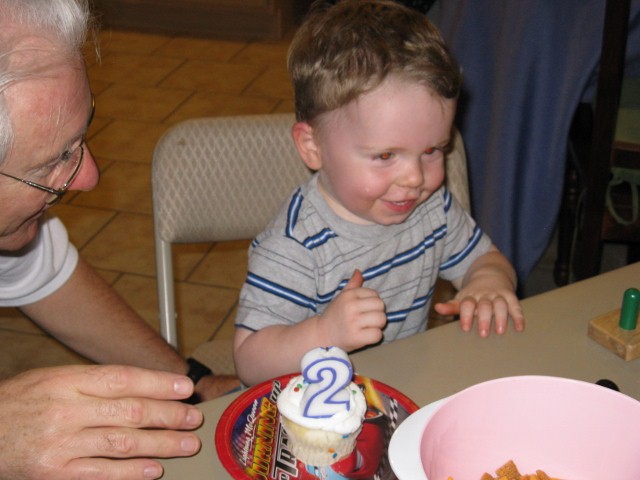
Happy Birthday!

Happy Birthday!

Do Kinder People Have an Evolutionary Advantage?
“Positive psychology” research indicates that the kinder you are, the more likely you are to survive — and evolve. Quoted from March 4, 2010 article from AlterNet, by Yasmin Anwar:

In contrast to “every man for himself” interpretations of Charles Darwin’s theory of evolution by natural selection, Dacher Keltner, a UC Berkeley psychologist and author of “Born to be Good: The Science of a Meaningful Life,” and his fellow social scientists are building the case that humans are successful as a species precisely because of our nurturing, altruistic and compassionate traits.

They call it “survival of the kindest.”

“Because of our very vulnerable offspring, the fundamental task for human survival and gene replication is to take care of others,” said Keltner, co-director of UC Berkeley’s Greater Good Science Center. “Human beings have survived as a species because we have evolved the capacities to care for those in need and to cooperate. As Darwin long ago surmised, sympathy is our strongest instinct.”

…While much of the positive psychology being studied around the nation is focused on personal fulfillment and happiness, UC Berkeley researchers have narrowed their investigation into how it contributes to the greater societal good.

One outcome is the campus’s Greater Good Science Center, a West Coast magnet for research on gratitude, compassion, altruism, awe and positive parenting, whose benefactors include the Metanexus Institute, Tom and Ruth Ann Hornaday and the Quality of Life Foundation.

Christine Carter, executive director of the Greater Good Science Center, is creator of the “Science for Raising Happy Kids” Web site, whose goal, among other things, is to assist in and promote the rearing of “emotionally literate” children. Carter translates rigorous research into practical parenting advice. She says many parents are turning away from materialistic or competitive activities, and rethinking what will bring their families true happiness and well-being.

“I’ve found that parents who start consciously cultivating gratitude and generosity in their children quickly see how much happier and more resilient their children become,” said Carter, author of “Raising Happiness: 10 Simple Steps for More Joyful Kids and Happier Parents” which will be in bookstores in February 2010. “What is often surprising to parents is how much happier they themselves also become.” Read whole article

See our own Creative Edge education model, teaching basic “emotional literacy” self-help skills of Intuitive Focusing and Focused Listening to increase creativity and empathy throughout life.

Free Downloads: 

Complete Focusing Instructions Manual (17 pages)

“Ajas” Instantaneos Mini-Manual

Creative Edge Focusing (TM) (www.cefocusing.com ) teaches two basic self-help skills, Intuitive Focusing and Focused Listening, which can be applied at home and at work through The Creative Edge Focusing Pyramid.

Based upon Gendlin’s Experiential Focusing (www.focusing.org ) and Rogers’ Empathic Listening, our website is packed with Free Resources and instructions in these basic self-help skills. Learn how to build Support Groups, Conscious Relationships, and Creative Edge Organizations based upon these basic skills of emotional intelligence.

Resources: Free Articles, Training, Classes

Dr. Kathy McGuire, Director

Creative Edge Focusing (TM)

www.cefocusing.com

The site of new insights and creative solutions is at the edge of what is already known. This edge, The Creative Edge, holds implicit within it all past and future knowing about the problem, more than could ever be put into words in a linear way

  • Share/Save/Bookmark

HARD-WIRED FOR COLLABORATION: PHYSICAL TOUCH INCREASES PERFORMANCE

By Kathy McGuire, March 1, 2010 1:23 pm

In Born To Be Good: The Science of a Meaningful Life (Norton, 2009),  Dacher Keltner of UC/Berkeley discusses the relationship between physical touch and performance: a supportive touch on the shoulder can increase participation in classrooms, and new research by Michael Kraus and co-authors Cassy Huang and Keltner, soon to appear in the journal Emotion, shows that basketball teams where players touched each other, in a supportive way, performed better than those with less touch. Highest performing players were also those giving the highest number of supportive touches. As summarized in a recent article by Benedict Carey of  The New York Times, “Touchy-feely sports teams have edge, evidence suggests,”:

“A warm touch seems to set off the release of oxytocin, a hormone that helps create a sensation of trust, and to reduce levels of the stress hormone cortisol. In the brain, prefrontal areas that help regulate emotion can relax, freeing them for another of their primary purposes: problem solving. In effect, the body interprets a supportive touch as ‘I’ll share the load.’

‘We think that humans build relationships precisely for this reason, to distribute problem solving across brains,’ says James A. Coan, a psychologist at the University of Virginia. ‘We are wired to literally share the processing load, and this is the signal we’re getting when we receive support through touch.’ ”

More evidence for the assumptions of Creative Edge Focusing (TM)’s model for Creative Edge Organizations, where more “feminine” values of support, empathy, listening, colleagiality, and attention to relationships feed the bottom line, encouraging creative problem solving through collaboration.

Free Downloads: 

Complete Focusing Instructions Manual (17 pages)

“Ajas” Instantaneos Mini-Manual

Creative Edge Focusing (TM) (www.cefocusing.com ) teaches two basic self-help skills, Intuitive Focusing and Focused Listening, which can be applied at home and at work through The Creative Edge Focusing Pyramid.

Based upon Gendlin’s Experiential Focusing (www.focusing.org ) and Rogers’ Empathic Listening, our website is packed with Free Resources and instructions in these basic self-help skills. Learn how to build Support Groups, Conscious Relationships, and Creative Edge Organizations based upon these basic skills of emotional intelligence.

Resources: Free Articles, Training, Classes

Dr. Kathy McGuire, Director

Creative Edge Focusing (TM)

www.cefocusing.com

The site of new insights and creative solutions is at the edge of what is already known. This edge, The Creative Edge, holds implicit within it all past and future knowing about the problem, more than could ever be put into words in a linear way

  • Share/Save/Bookmark

Panorama theme by Themocracy